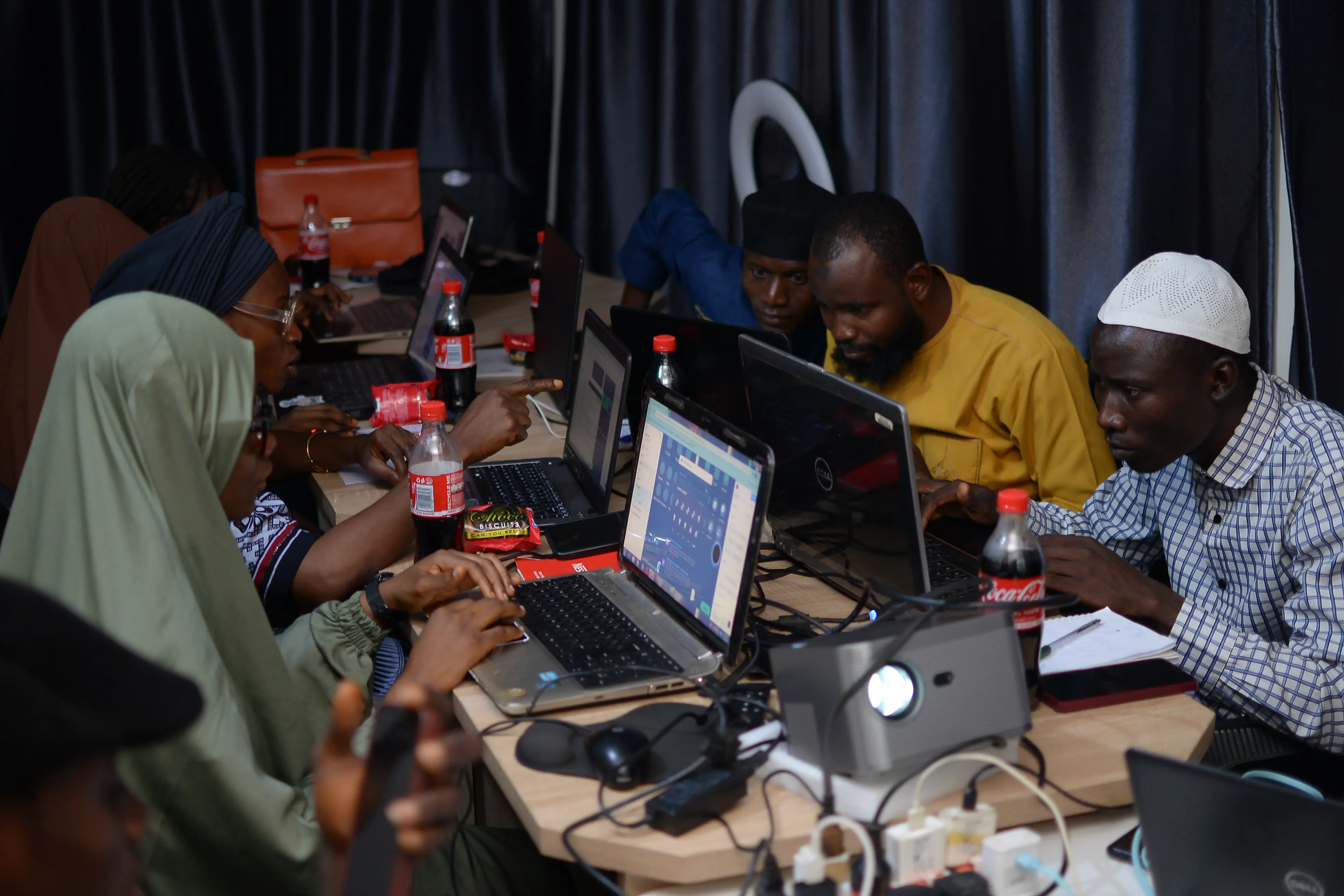


Interested in cybersecurity but unsure where to begin? Here is how to build your technical foundation, practise safely, choose the right training and create work that demonstrates what you can do.

Imagine a small business owner asks you a simple question: “How secure are our computers and online accounts?”
Would you know where to start?
You might check who has access to the business email, whether staff use strong passwords, how customer records are protected and what would happen if an important device stopped working.
These are cybersecurity questions. Answering them requires more than knowing how to use hacking tools.
If you are exploring a cybersecurity course in Nigeria, the most useful starting point is understanding what you need to learn, how to practise and what evidence of progress you should expect to produce.
You do not need to know everything about computers before starting. You do, however, need a sensible learning sequence, patience and opportunities to apply what you learn.
What Is Cybersecurity, and What Do Cybersecurity Professionals Do?
Cybersecurity is the practice of protecting computer systems, networks, applications, devices and information from digital threats, unauthorised access and disruption.
Its purpose is not simply to stop hackers. It is also to help people and organisations use technology safely and maintain access to the systems they depend on.
Think about a business that uses WhatsApp to communicate with customers, email to receive orders and online banking to manage payments.
If an employee’s email account is compromised, the problem could extend beyond that person’s inbox. Someone might impersonate the business, access sensitive documents or attempt to redirect payments.
Cybersecurity helps organisations identify such risks, introduce preventive measures, detect suspicious activity and respond when something goes wrong.
The field includes several career paths:
- Security operations: Monitoring systems, investigating alerts and helping organisations respond to suspicious activity.
- Network security: Protecting the connections between computers, servers and other devices.
- Penetration testing: Assessing authorised systems to identify vulnerabilities before they are exploited.
- Digital forensics and incident response: Investigating security incidents, preserving relevant evidence and supporting recovery.
- Cloud security: Protecting information and applications hosted on cloud platforms.
- Governance, risk and compliance: Helping organisations understand security responsibilities, manage risks and meet applicable requirements.
You do not have to choose a specialisation immediately.
In fact, rushing into advanced tools before understanding computer networks and operating systems can make cybersecurity more confusing than necessary.
The NIST NICE Framework provides a useful reference for exploring cybersecurity work roles and the knowledge and skills associated with them.
Can You Learn Cybersecurity Without an IT Background?
Yes. A beginner can start learning cybersecurity without a computer science degree or previous professional experience.
However, starting without experience is different from becoming professionally competent without developing technical knowledge.
Cybersecurity builds on an understanding of how digital systems work.
If you do not understand how a computer connects to a website, what happens when someone signs into an account or why software requires updates, security terminology may initially seem difficult.
That is normal.
Start with these five foundations.
1. Understand How Computers Work
Learn about operating systems, files, software installation, user accounts and permissions.
Pay attention to how information is stored and how different users gain access to it.
Your first exercise: Create a standard user account on a computer you own or are authorised to use. Compare its permissions with those of an administrator account.
This introduces an important cybersecurity principle: people and applications should receive only the access they need.
2. Learn Computer Networking
Networking explains how devices communicate.
Start with:
- IP addresses
- Domain Name System (DNS)
- Routers and switches
- Ports and common protocols
- Local area networks
- HTTP and HTTPS
You do not need to memorise every networking concept immediately.
Focus on understanding the journey information takes between a device and a service.
Your first exercise: Draw a simple diagram showing how your laptop connects through a router to the internet. Label the main components and explain what each does.
3. Become Comfortable With Operating Systems and the Command Line
Windows and Linux are widely used in computing environments.
Learn how to navigate directories, inspect files, check network settings and understand system permissions.
Linux is particularly useful in many cybersecurity learning environments, but beginners should develop general operating-system knowledge rather than memorising commands without understanding them.
Your first exercise: Use a Linux training environment to create folders, manage files and examine basic permissions.
4. Learn Core Security Principles
Once the fundamentals are clearer, study:
- Confidentiality, integrity and availability
- Authentication and authorisation
- Threats, vulnerabilities and risk
- Malware and social engineering
- Password security and multifactor authentication
- Software updates and patching
- Data backups and recovery
- Basic security monitoring
Try to connect each principle to an everyday situation.
For instance, multifactor authentication is easier to understand when you consider why an email account should remain protected even if its password is exposed.
5. Develop Basic Scripting Skills
Programming is not a universal entry requirement for every cybersecurity role.
Nevertheless, understanding basic scripting can help you inspect information, automate repetitive tasks and understand how applications behave.
Python is one useful language to explore.
Begin with variables, conditions, loops and reading simple text files. You can progress towards processing fictional security logs or organising data from authorised exercises.
The goal is to understand what your code does, not merely copy scripts that appear to work.
Free Cybersecurity Learning Resources for Beginners in Nigeria
You can begin learning without immediately paying for a training programme.
Several established learning platforms provide introductory resources.
Cisco Networking Academy
Cisco Networking Academy offers free, self-paced introductory courses, including Introduction to Cybersecurity and Networking Basics.
These resources are useful if you need a structured introduction to digital security and computer networking.
Start here if technical terminology is still unfamiliar.
TryHackMe
TryHackMe’s Pre Security learning path introduces beginners to computing, networking, web technologies and cybersecurity through guided activities.
It is particularly useful for learners who want to reinforce concepts through interactive exercises.
Check the platform for current free and paid access arrangements before enrolling.
NIST NICE Framework
The NIST NICE Framework Resource Center helps learners explore cybersecurity roles and their associated skills.
It is a career-development resource rather than a beginner training course.
Use it when you want to understand how different cybersecurity specialisations relate to actual work.
NITDA Cybersecurity Resources
Nigeria’s National Information Technology Development Agency (NITDA) provides information about cybersecurity awareness, policy, guidelines and national initiatives.
It offers useful Nigerian context, although its cybersecurity department page should not be confused with a complete practical training programme.
One effective approach is to combine foundational lessons with guided practice, then document what you have learned.
Three Cybersecurity Projects Beginners Can Build Without Expensive Equipment
You do not need to attack a website or purchase sophisticated hardware to create a meaningful beginner portfolio.
A portfolio can begin with small defensive projects that show your reasoning, technical understanding and ability to communicate findings.
Here are three practical examples.
Project 1: Analyse a Fictional Phishing Email
Phishing involves attempts to deceive people into revealing information, opening malicious files or taking actions that compromise their security.
For this project, create or obtain a clearly labelled fictional phishing example.
Imagine an email claims that your organisation’s payroll account will be suspended unless you confirm your details within 30 minutes.
Your task is to examine the message and identify possible warning signs.
Look for:
- An unexpected request for sensitive information.
- Language designed to create panic or urgency.
- A sender address that does not match the claimed organisation.
- A suspicious or misleading link.
- Instructions that discourage verification through normal channels.
Prepare a short report explaining your findings.
Your portfolio deliverable: A one-page phishing analysis containing the scenario, warning signs, risk assessment and recommended response.
Do not click suspicious links or download attachments from real phishing messages. Use fictional examples or recognised training material.
Project 2: Assess the Security of a Fictional Nigerian Small Business
Imagine a retail business in Ilorin with five employees.
The business communicates through WhatsApp Business, receives customer orders by email, stores records on a shared laptop and uses online banking.
The owner wants to reduce the likelihood of losing important accounts or business information.
Your assignment is to identify potential risks and propose sensible protections.
| Fictional finding | Potential risk | Recommended control |
|---|---|---|
| Several employees know the business email password | Unauthorised account access | Individual access where supported, strong unique passwords and MFA |
| Software updates are frequently postponed | Exposure to known vulnerabilities | Enable automatic updates and maintain a simple update schedule |
| Customer records exist only on one laptop | Data loss after device failure | Introduce protected, regularly tested backups |
| Former employees may retain account access | Inappropriate continued access | Review permissions when staff leave |
| Staff have received no phishing awareness training | Increased exposure to social engineering | Provide short, practical awareness sessions |
Next, rank the risks according to their possible impact and likelihood.
You do not need to use a complicated assessment system. A clearly explained low, medium or high classification is sufficient for this introductory exercise.
Conclude with three actions the fictional business should prioritise.
For example, you may decide that securing its primary email account, protecting customer records through backups and reviewing employee access are the most urgent improvements.
Explain why.
Your portfolio deliverable: A two-page small-business security assessment with a risk register and prioritised recommendations.
This exercise does not prove that a real business is secure. It demonstrates your ability to recognise potential weaknesses and recommend reasonable controls.
Project 3: Review a Fictional Security Incident
Create a scenario involving repeated unsuccessful sign-in attempts followed by a successful login to a company account.
Using fictional event records, organise the activity into a timeline.
Ask:
- When did the suspicious activity begin?
- How many unsuccessful attempts occurred?
- Which account was involved?
- What additional information would be needed to investigate?
- What immediate precautions might the organisation consider?
Avoid assuming that repeated failed logins automatically mean an attack succeeded.
Security analysis requires distinguishing observations from conclusions.
Your portfolio deliverable: A brief incident report containing an event timeline, observations, unanswered questions and recommended next steps.
You can complete this exercise using an ordinary spreadsheet or text document.
How to Turn Beginner Projects Into a Cybersecurity Portfolio
Completing an exercise is useful. Explaining what you did makes it easier for someone else to evaluate your work.
For each project, include six elements:
- Project title: A clear name explaining the work.
- Problem: The security issue or fictional scenario being assessed.
- Objective: What you intended to establish or improve.
- Method: The tools, information and steps used.
- Findings: What you observed, including any uncertainty.
- Recommendations and lessons: What should happen next and what you learned.
Use screenshots where appropriate, provided you have permission and the images do not reveal sensitive information.
Your portfolio can live in a GitHub repository, a personal website or a neatly organised PDF containing your project descriptions.
Be honest about your contribution. If an exercise was guided, acknowledge that. If the scenario was fictional, say so.
A clear beginner report is more credible than an impressive-looking document that makes claims its author cannot explain.
Important: Never scan, probe or test someone else’s website, account, device or network without explicit authorisation. Use your own systems, properly authorised environments or legitimate training labs.
A Realistic 12-Week Cybersecurity Learning Roadmap
A learning schedule helps you maintain focus, but it should measure understanding rather than simply count completed lessons.
Here is a possible starting plan.
Weeks 1–3: Computing and Networking Foundations
Focus on operating systems, accounts, permissions, IP addresses, DNS and basic network communication.
Milestone: Explain how devices communicate and describe why account permissions matter.
Weeks 4–6: Security Fundamentals
Study common threats, authentication, security controls, backups, phishing and basic incident response.
Complete introductory guided exercises.
Milestone: Identify several common cybersecurity risks and explain how basic security controls reduce them.
Weeks 7–9: Practical Projects
Select two or three projects appropriate to your level.
Create your fictional phishing analysis, small-business risk assessment or security incident report.
Milestone: Produce documented work that another learner or instructor can follow and evaluate.
Weeks 10–12: Portfolio and Career Exploration
Review and improve your reports.
Organise your portfolio, explore cybersecurity specialisations and read entry-level job descriptions to understand the skills employers request.
Milestone: Explain what you have learned, demonstrate your completed projects and identify the next skills you need to develop.
Twelve weeks can provide a useful introduction. It is not a guarantee of employment or professional readiness.
Your progress will depend on your existing knowledge, available study time, quality of practice and the complexity of your chosen path.
Do You Need an Expensive Laptop to Learn Cybersecurity?
Not necessarily.
A basic computer can support many early activities, including networking lessons, documentation, introductory programming and lightweight browser-based exercises.
A smartphone may also be useful for reading, watching lessons and studying concepts.
However, a computer becomes increasingly valuable when you need to work with operating systems, analyse files, use development tools or run practical labs.
More demanding activities, such as running several virtual machines, may require additional memory, processing capacity and storage.
Before paying for a course, ask the provider which tools you will use and what equipment you need.
You should not have to discover halfway through a programme that essential practical exercises require hardware you cannot access.
For learners managing limited data subscriptions, electricity interruptions or shared computers, a realistic study routine may involve downloading permitted course materials, keeping offline notes and scheduling practical sessions when reliable access is available.
Consistency matters, but so does choosing learning activities that fit your circumstances.
How to Choose a Good Cybersecurity Course in Nigeria
Not every cybersecurity course is designed for the same learner.
Some programmes introduce the fundamentals. Others focus on security operations, penetration testing, cloud security or preparation for particular certification examinations.
Before registering, evaluate the programme against these questions.
Does the course begin at your current level?
If you have no IT background, choose training that explains networking, operating systems and security principles before introducing complex tools.
A beginner should not have to pretend to understand concepts that have never been explained.
Will you practise what you learn?
Ask whether the programme includes supervised exercises, authorised labs and projects.
Practical training should help you understand why a technique works, what its limitations are and how to document your findings.
Can you see the curriculum?
A credible programme should be able to explain what learners will study and what they are expected to know or produce by the end.
A list of popular cybersecurity tools is not a substitute for a clear learning plan.
Who will review your work?
Feedback helps beginners identify misunderstandings and improve their approach.
Ask whether instructors review projects, answer technical questions and explain errors.
What does the certificate represent?
Find out whether the programme issues its own completion certificate, prepares learners for an external certification examination or includes a separate professional credential.
These are not necessarily the same thing.
Check whether an external examination is included in the fee or requires separate registration and payment.
What is the total cost?
Cybersecurity course fees in Nigeria vary depending on duration, delivery format, equipment, instructor support and the learning activities provided.
Ask for the total payable amount, not just the advertised tuition.
Confirm any registration fees, software costs, examination charges and equipment requirements.
What should you be able to show afterwards?
Ask about the practical work students are expected to complete.
A course that helps beginners develop documented skills may offer more immediate educational value than one focused entirely on covering topics.
No responsible training provider should guarantee a cybersecurity job simply because you complete a short course.
Where Can You Learn Cybersecurity in Ilorin, Kwara State?
For someone living in Ilorin, choosing a learning environment may involve practical considerations beyond the course outline.
How far is the training centre? Can you attend consistently? Will you have access to guided exercises? Can you ask questions when a concept is unclear?
Independent online learning works well for many people. Others benefit from scheduled classes, instructor feedback and learning alongside people working through similar challenges.
Craft Innovation Hub in Ilorin offers a cybersecurity training pathway that includes foundational security topics, network protection, threat analysis and practical exercises. Its published programme outline also incorporates project-based learning.
Learners considering structured training can review the CIH Cybersecurity Programme and confirm the current curriculum, fees, duration, delivery format and registration arrangements.
Whether you study independently or join a training programme, judge your progress by what you can understand, explain and demonstrate.
What Career Opportunities Can Cybersecurity Learning Lead To?
Cybersecurity skills are relevant across organisations that depend on digital systems.
Depending on your interests and qualifications, you may eventually explore roles involving:
- Security monitoring and analysis
- IT support with security responsibilities
- Network administration and protection
- Governance, risk and compliance
- Security awareness and education
- Incident response
- Cloud security
- Digital forensics
- Authorised security testing
These positions have different entry requirements. Some may be accessible through junior pathways, while others require substantial experience, further qualifications or specialised technical knowledge.
A useful approach is to read several relevant job descriptions and compare their requirements with your current abilities.
If three positions request networking knowledge, Linux familiarity and basic security monitoring, you have a clearer direction for your next learning stage.
You can also explore the NIST cybersecurity learner resources to understand how cybersecurity knowledge connects to different work roles.
Avoid treating certificates, projects or course completion as automatic employment guarantees.
They can contribute to your development, but employers may also assess your technical ability, communication, judgment and practical experience.
Frequently Asked Questions About Cybersecurity Courses in Nigeria
1. Can I learn cybersecurity without knowing how to code?
Yes. You can begin with computer fundamentals, networking and security concepts. Coding becomes useful in many technical roles, but it is not necessary to master programming before starting.
2. How many months does it take to learn cybersecurity?
There is no universal timeline. A few months of consistent study may help you develop foundational knowledge and beginner projects. Professional competence and specialised roles generally require further learning and experience.
3. Is cybersecurity difficult for beginners?
It can be challenging because it combines several technical subjects. Breaking the learning process into smaller stages makes it more manageable. Start with computing and networking before tackling advanced security concepts.
4. Can I learn cybersecurity online in Nigeria?
Yes. Online platforms provide introductory lessons and guided exercises. You can also explore structured training programmes if you need scheduled instruction, accountability or feedback.
5. Is a cybersecurity certificate enough to get a job?
No certificate guarantees employment. Employers may consider qualifications alongside technical understanding, practical experience, communication skills and the requirements of a particular role.
6. What should I look for in a beginner cybersecurity course?
Look for a clear curriculum, appropriate prerequisites, ethical practical exercises, instructor feedback, transparent fees and realistic learning outcomes. Ask what projects you will complete and what the certificate represents.
7. What is the best first cybersecurity project?
A fictional phishing analysis or small-business security checklist is a sensible starting point. Both allow you to demonstrate security reasoning, documentation and practical recommendations without testing unauthorised systems.
Start With One Skill and One Project
Cybersecurity is a broad field. That does not mean your first step has to be complicated.
Learn how computers and networks function. Understand basic security risks. Practise in authorised environments. Document what you discover and seek feedback.
If you are unsure where to begin today, choose one task: complete an introductory networking lesson, analyse a fictional phishing email or prepare a simple security checklist for a hypothetical business.
Then explain your work in your own words.
A meaningful portfolio is built through repeated efforts to understand problems, apply sound methods and communicate findings honestly.
You do not have to know everything before you begin. You need a foundation you can keep building.
For learners considering guided cybersecurity training in Ilorin, explore Craft Innovation Hub’s cybersecurity programme to see how structured learning and practical exercises may fit your goals.