Beyond Certificates: CIH Data Analytics Pilot Pushes Practical Skills, Productivity in Kwara
In a city where many young people and workers are searching for employable skills, Craft Innovation Hub’s six-day pilot showed how business, health and public records can become tools for productivity, accountability and better decisions.
By ABDULRASAQ Ahmed Abiodun
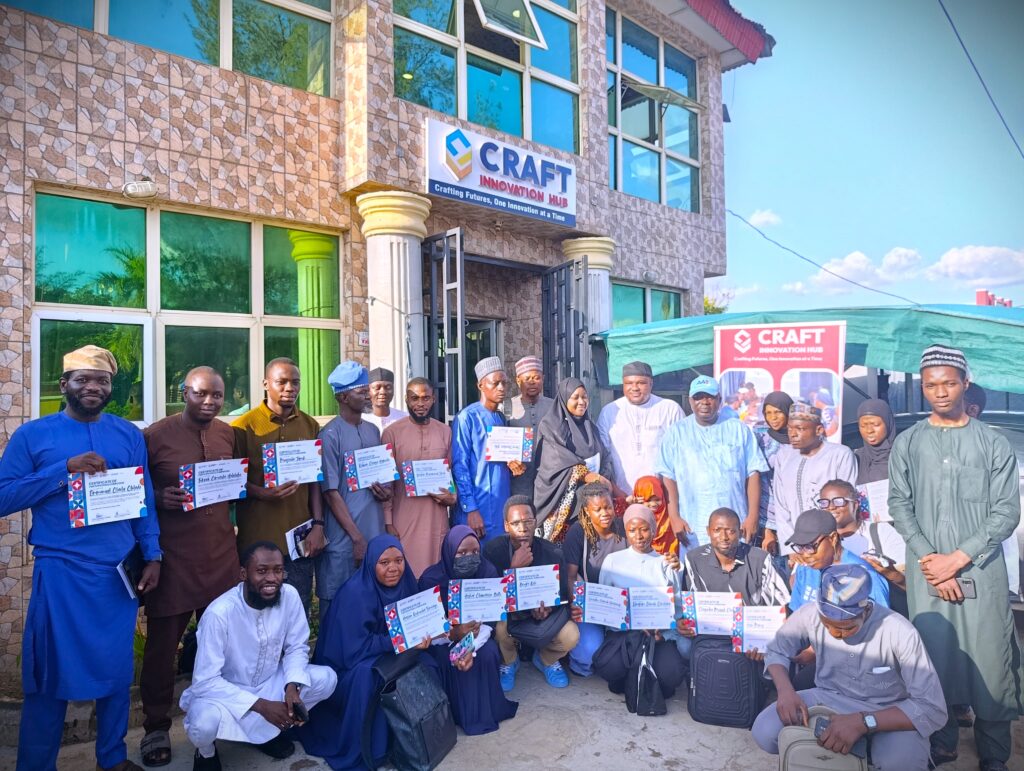
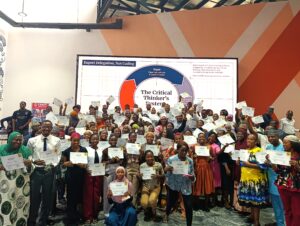
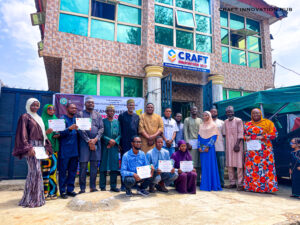
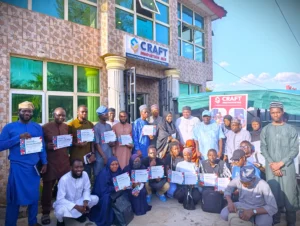
By late afternoon on Saturday, the laptops had given way to microphones, dashboards had become presentations, and 27 learners sat waiting to receive certificates inside Craft Innovation Hub, Agbo Oba, Ilorin.
For six days, they had worked with records that looked ordinary at first: sales figures, health data, administrative records, and institutional information. By the end of the training, those records had become charts, insights, questions, and decisions.
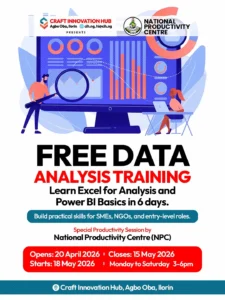
The event was the Mentorship and Certificate Presentation Ceremony of the Free Data Analytics and Productivity Pilot Programme, organised by Craft Community Impact and Skills Foundation under the Craft Innovation Hub ecosystem.
But the story was not only about certificates.
It was about the growing demand for practical digital skills in Kwara State, the discipline required to complete a training process, and the urgent need for young people, workers, professionals and institutions to understand how data can improve everyday decisions.
CIH Certifies 27 After Free Data Analytics Training in Ilorin
From Over 110 Applicants to 27 Certified Beneficiaries
The programme began with more than 110 applicants. After selection, onboarding and attendance monitoring, about 30 became active beneficiaries. At the end of the process, 27 participants met the certification requirement of at least 60 per cent attendance and active participation.
For the organisers, that filtering was deliberate.
The programme was not designed to reward registration alone. It was designed to recognise consistency, practical effort and commitment.
Across the training period, participants worked on business and sales data, health record data, and public records or administrative data. They learnt how to clean records, organise figures, identify patterns, prepare simple dashboards and present findings in a way that could support real decisions.
That practical approach became the strongest message of the closing ceremony: data analytics is no longer a distant skill for only large companies or advanced technology workers. It is already part of business, healthcare, education, public administration and community development.
Learning That Goes Beyond Excel
Many people see Excel as a place to type figures. The CIH pilot challenged that view.
Participants saw how sales records could show product performance, revenue patterns and customer behaviour. They saw how health records could reveal patient visits, tests, billing patterns and follow-up needs. They also saw how public and institutional records could track requests, complaints, payments, delays and service pressure points.
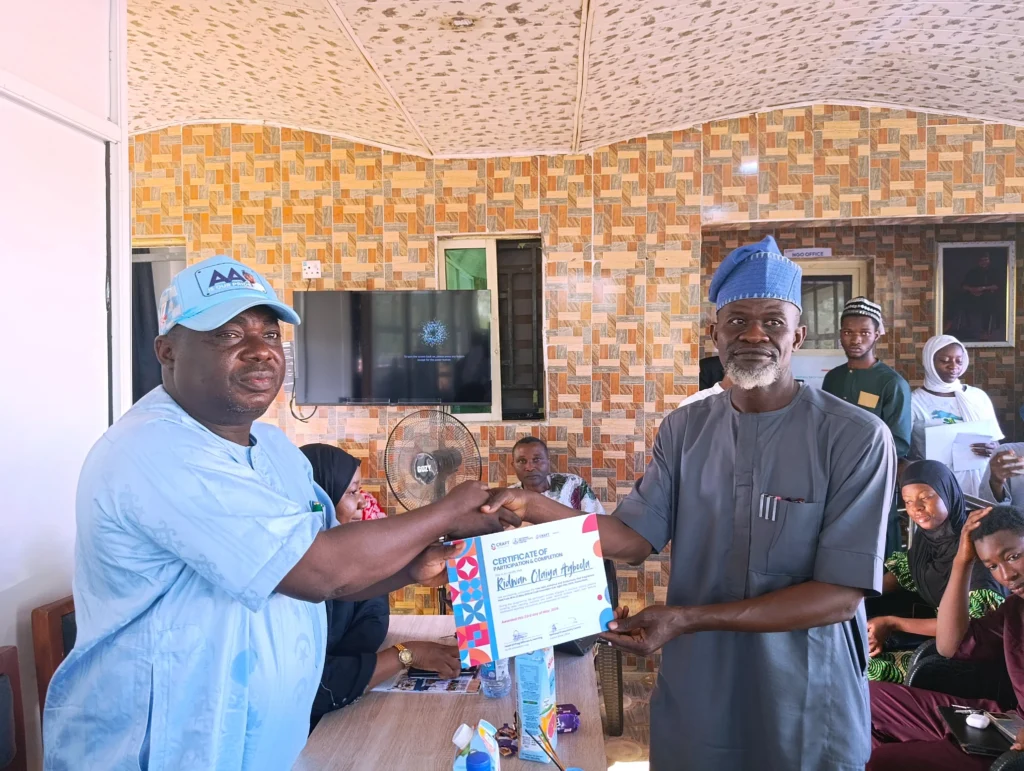
For Ridwan Olaiya Agboola (PhD) of Al-Hikmah University, the training strengthened the link between academic knowledge and practical workplace competence.
“What stood out for me was the practical nature of the programme. Data was not treated as theory. We worked with records, asked questions from them and saw how analysis can support decisions in institutions like universities, health facilities and public offices,” he said.
Ridwan Olaiya Agboola
That connection between theory and practice became one of the recurring points at the ceremony.
Health Data, Business Records and Everyday Work
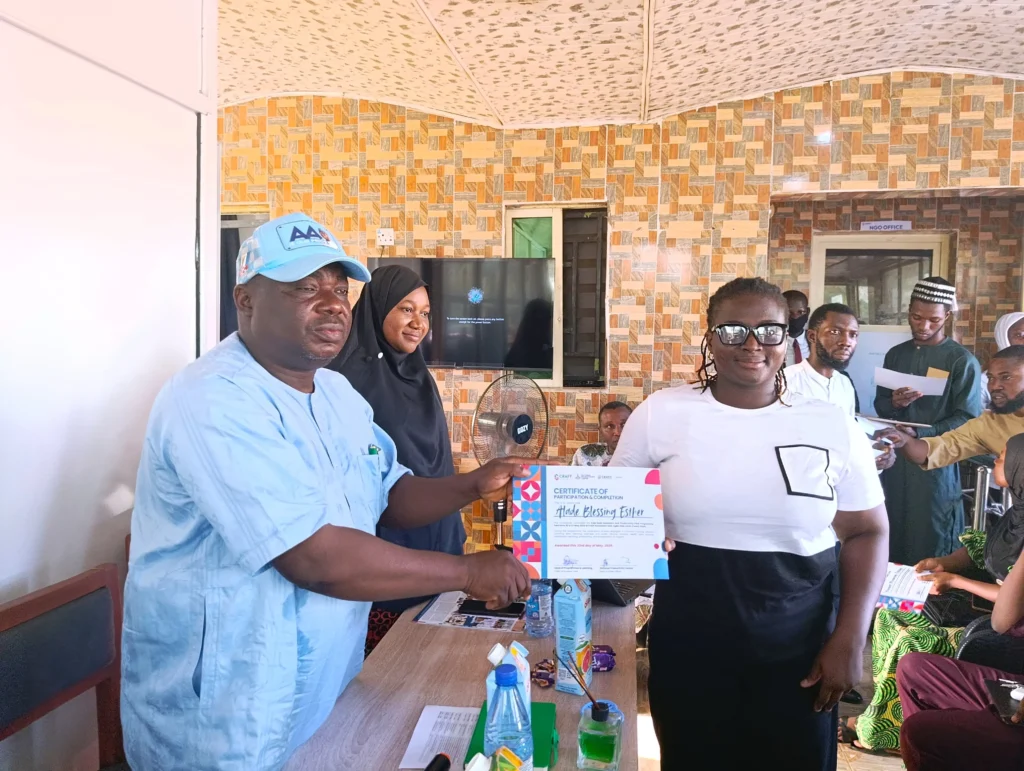
For Alade Blessing Esther of Leah Medical Centre, the health data session was particularly relevant.
“As someone connected to the health sector, I could immediately see the importance of the health record analysis. Patient visits, tests, billing and follow-up records are not just routine entries. If they are analysed properly, they can help improve service delivery and planning,” she said.
Alade Blessing Esther
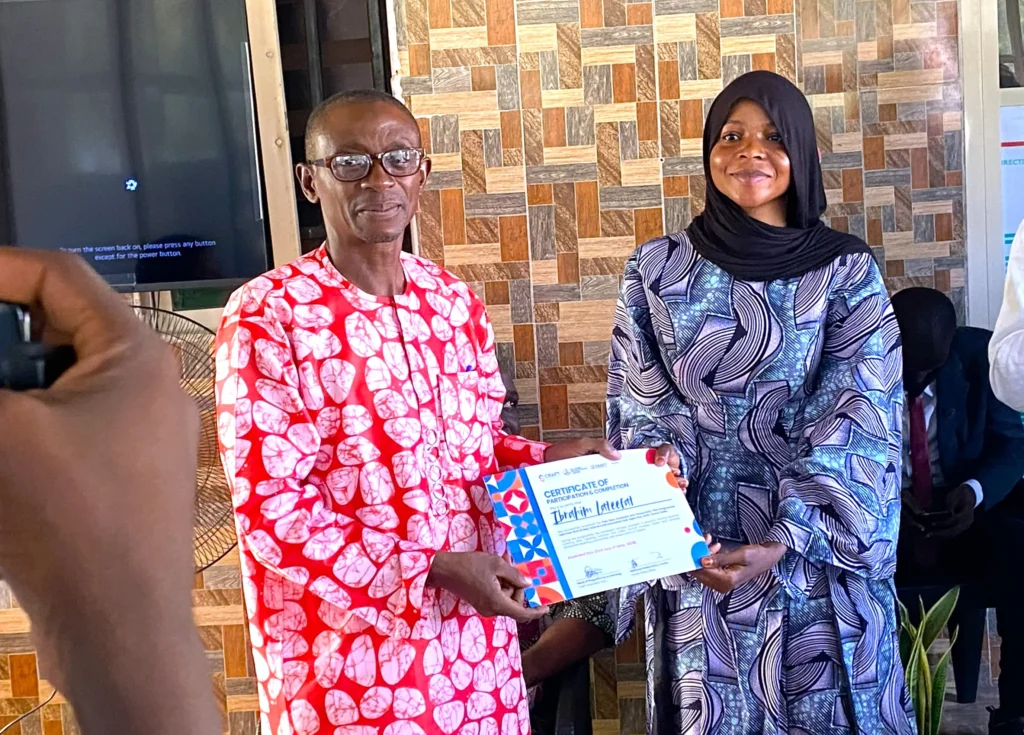
A registered nurse, Ibrahim Lateefat, said the training changed how she viewed clinical and administrative records.
“Before now, I saw most records as documentation. But this programme showed me that records can speak. If health workers understand data better, we can identify patterns, follow-up needs and areas where patients may require more attention,” she said.
Ibrahim Lateefat
The relevance was not limited to healthcare.
Bright Kolo, an artist and signage designer, said the business and sales dashboard session helped him see how data could support creative businesses.
“As a creative person, I used to focus mainly on design and delivery. But now I understand that sales records, customer information and product demand can help a business know what to produce more, where to improve and how to plan better,” he said.
For Agbi Mercy, an entrepreneur, the training connected directly with small business survival.
“This training made me understand that business decisions should not be based on guesswork alone. Even a small business can use data to know what is moving, what customers prefer and where money is coming from,” she said.
Participants Move From Learning to Presentation
The certificate ceremony was not only ceremonial. Participants were required to present what they had learnt.
Each group was expected to explain the dataset used, the problem identified, key insights, dashboard or analysis output, lessons learnt and the practical use of the analysis.
That format changed the atmosphere. The beneficiaries were not simply called out to receive certificates. They first had to show evidence of learning.
Hassan Rosheedat Temitayo, a graduate and researcher, said the presentation aspect made the training more serious.
“The group presentation helped us understand that analysis is not complete until you can explain it. It is not enough to create charts. You must know what the chart is saying and how that information can help someone make a better decision,” she said.
For Omisakin Olamide Christianah, a touring marketer, the programme gave practical meaning to customer and movement data.
“In marketing, we meet people, move around and gather information every day. This training helped me see that if those records are properly organised, they can show where demand is coming from and how to target people better,” she said.
Babatunde Kafayat Olayinka, a budget officer at Asa Local Government, said the public records component was especially important for government work.
“For those of us in public service, data is very important. Budgets, requests, payments, projects and reports must be properly tracked. This programme showed how data can help improve accountability and decision-making in local government administration,” she said.
Mentorship From Media, Academia and Youth Development
The ceremony also brought together mentors from media, academia and public leadership.
The Honourable Commissioner for Youth Development, Hon. Amb. Ndanusa Shehu, used the occasion to reinforce the importance of skills, discipline and employability among young people.
“The youth of today must go beyond certificates alone. They must build skills, discipline and the capacity to create value. Programmes like this are important because they give young people practical tools they can use for employment, enterprise and responsible development,” he said.
Representing the Vice-Chancellor of Al-Hikmah University, Dr. (Mrs.) Jamilah Yusuf spoke on the need to strengthen the bridge between the classroom and the world of work.
“Universities produce knowledge, but today’s world also demands competence. When students and graduates are exposed to practical digital skills, they become better prepared for employment, research, innovation and service,” she said.
She added that stronger university-industry relationships could help students move beyond theory and gain the confidence to solve real problems.
For Mr. Abiodun Abdulkareem, former Chairman of the Nigeria Union of Journalists, Kwara State Council, and Editor of The Herald on Sunday, the ability to interpret and communicate data is now essential in public communication.
“Data without communication can be misunderstood, and communication without data can mislead people. Young people must learn how to use information responsibly, interpret facts correctly and tell stories that are backed by evidence,” he said.
His message connected strongly with the presentation segment, where participants had to explain what their dashboards and insights meant.
Building on Al-Hikmah University SIWES Experience
The programme also built on CIH’s recent engagement with Public Health students of Al-Hikmah University, Ilorin, during their SIWES placement at the hub.
That earlier exposure introduced students to digital health processes, Excel, Pivot Tables, and practical handling of health-related data. It strengthened CIH’s conviction that education, health, and administration must become more data-driven if institutions are to improve service delivery and productivity.
The Free Data Analytics and Productivity Pilot Programme therefore, became another step in CIH’s attempt to close the gap between classroom knowledge, workplace realities, and community needs.
Why the Pilot Matters Beyond the 27 Beneficiaries
Although 27 participants were certified, the significance of the programme goes beyond the number.
Kwara State, like many parts of Nigeria, is confronting a practical skills gap. Most people have certificates, but limited hands-on competence. Alot of offices keep records, but do not analyse them. Businesses collect figures, but do not use them to improve decisions. Many institutions generate data daily, but still depend on manual reporting and guesswork.
The CIH pilot offered a modest but practical response to that problem.
It showed that a young person in Ilorin can learn a relevant digital skill without leaving the state. Also showed that health workers can begin to view patient records as a source of insight. It showed that public officers can use administrative data to improve accountability. It showed that entrepreneurs can use simple dashboards to understand business performance.
Most importantly, it showed that learning becomes more powerful when it is tied to real-life examples.
A Model That Can Be Scaled
The presence of mentors and representatives from public institutions, academia, media and community leadership pointed to a larger opportunity.
With stronger partnerships, programmes like this can be expanded to reach more young people, workers, students, entrepreneurs and public officers across Kwara State.
For ministries and youth-focused agencies, the model can support employability and responsible digital development.
In universities, it can strengthen SIWES, internships and practical exposure.
For local governments, it can improve record handling, reporting and administrative decision-making.
Among health institutions, it can build staff capacity in patient record analysis, service trends and operational reporting.
In donors and CSR partners, it provides a measurable pathway: applicants, attendance, practical outputs, certification and follow-up learning.
From Certificate to Competence
As the beneficiaries received certificates and posed for photographs, the message of the day remained clear: the certificate is only a beginning.
The participants were encouraged to continue learning Excel, SQL, Power BI, dashboard reporting, and deeper data interpretation. The free pilot gave them exposure, but competence will require continued practice.
That message is especially important in a labour market where employers increasingly value proof of skill, not just paper qualifications.
For the 27 certified beneficiaries, the programme ended with applause, photographs and handshakes. But for many of them, the deeper journey has just started.
They now know that records are not silent. They now know that numbers can tell stories. They now know that dashboards are not decorations. They now know that data, when properly understood, can lead to better decisions.
And for Kwara State, the question left behind by the pilot is larger than the event itself:
What if more young people, workers and institutions learnt how to turn raw records into real decisions?
Craft Innovation Hub Ltd is Ilorin’s premier destination for innovation, technology, media, and social impact. Strategically located in Agbo Oba, Ilorin, Kwara State, Craft Innovation Hub brings together a dynamic ecosystem of ventures under one roof, an ICT Training Centre, a forward-thinking NGO, and a vibrant Media & Podcast Studio.