

By ABDULRASAQ Ahmed Abiodun
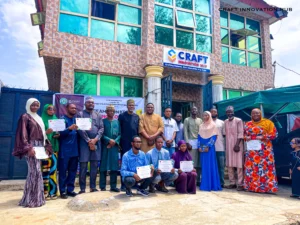
On a normal day, Craft Innovation Hub (CIH) on Agbo Oba Road, Adeta, is a place for skills. People come to learn, build portfolios, and chase income in a hard economy.
On Wednesday, 26 November 2025, the same space carried a different urgency.
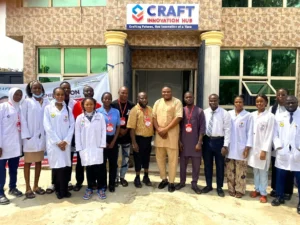
CIH hosted a free, cancer focused health screening providing breast and cervical screening (Pap smear), breast ultrasound, prostate examination, prostate ultrasound, and PSA tests for men, alongside blood pressure, weight and BMI checks. For hundreds who passed through, it was not just the “free” that mattered. It was the feeling that the process was organised, private, and complete.
And when cost and confusion were removed, the pattern that surfaced from the day’s screening logs was hard to ignore.
What the figures suggested, and what they did not
CIH’s consolidated event records indicated a notable number of results were flagged for follow up across several screening categories. That phrase matters.
Flagged for follow up does not mean a confirmed diagnosis. It means a screening result fell outside the reference ranges or clinical expectations used on the day, and the beneficiary was advised to seek further clinical evaluation.
According to the event logs made available after the outreach:
- Breast related screening entries showed 49 out of 116 women flagged for follow up.
- Blood sugar checks recorded 49 out of 174 flagged as concerning.
- Blood pressure checks recorded 48 out of 130 outside normal readings.
- Prostate ultrasound entries recorded 16 out of 57 men flagged for follow up.
- PSA entries recorded 13 out of 59 men outside expected ranges for follow up discussion.
Even with the necessary caution around interpretation, the implication is clear: when the financial barrier is removed, communities reveal risks that many people are carrying silently.
The event drew hundreds, with organisers reporting approximately 200 beneficiaries screened and a wider attendance of about 550 including volunteers and invited guests. Women presented in particularly strong numbers, a pattern many outreach organisers observe when women’s health services are offered with dignity and privacy.
Why this matters beyond one outreach
Health experts have long warned that late presentation is a major reason cancer outcomes remain poor in many low and middle income settings. Cervical cancer, in particular, is one of the most preventable cancers, yet still takes lives at scale.
The World Health Organisation (WHO) says cervical cancer is largely preventable through HPV vaccination and regular screening, and can be cured if detected early and treated promptly. WHO estimates around 660,000 new cases and around 350,000 deaths globally in 2022, with the highest burden in low and middle income countries.
Nigeria’s cancer profile reinforces why breast, cervical, and prostate screening remain high yield interventions. The Global Cancer Observatory (GLOBOCAN 2022) Nigeria fact sheet lists breast cancer as the leading cancer by new cases, followed by prostate and cervix uteri among the top three.
So when a community screening flags large numbers for follow up, it is not a reason for panic. It is a signal of unmet need, and a reason for earlier action.
The real innovation was not the ultrasound machine
Community outreaches are common. What is less common is an outreach that treats “results delivery” as part of the service, not an afterthought.
CIH ran the programme with a digitised workflow. Beneficiaries were registered into a structured system and were able to access their results privately through secure channels including SMS and email notifications, and an online portal login.
In public health, this is not a cosmetic detail. It addresses a frequent failure point in outreaches: tests happen, but results are delayed, misplaced, or shared carelessly, and follow up becomes unlikely.
Privacy and speed increase trust. Trust increases participation. Participation increases early detection.
What screening actually means, in plain terms
One reason people avoid screening is fear. Many hear “cancer test” and assume “cancer verdict”. Screening is not a verdict.
- Breast ultrasound and examinations support early detection of suspicious lumps or changes.
- Prostate examination, ultrasound, and PSA testing help identify men who may need further evaluation. PSA can be influenced by multiple factors, so abnormal values typically require proper clinical interpretation rather than assumptions.
- Blood pressure, weight and BMI, and blood sugar checks capture silent risks that often travel together and can worsen long term health outcomes if ignored.
The dignity factor, and why women often show up more
One practical lesson from the Ilorin turnout was behavioural, not medical.
Women presented in strong numbers, a pattern consistent with what many community health organisers observe: when women’s health services are offered in a respectful, private, and convenient setting, demand rises sharply. It also hints at the hidden backlog created by stigma, embarrassment, misconceptions, time poverty, and cost.
For men, the opposite challenge often holds. Many delay prostate checks due to fear or discomfort, even when services are available. That is why future screening programmes must design mobilisation that speaks directly to male reluctance, not assume men will “eventually come”.
The role of public leadership, and why protocol was not just ceremony
Senior public presence at community health programmes is more than photographs. It is a social signal that reduces suspicion and normalises preventive behaviour.
At the CIH outreach, dignitaries included the Kwara State Commissioner for Education and Human Capital Development, Dr Lawal Olalekan Olohungbebe, and the Kwara State Commissioner for Youth Development, Hon. Shehu Ndanusa Usman, whose portfolios have been publicly documented by the Kwara State Government.
Also present was Prof. Abiodun Afolayan, Provost of the College of Health Sciences, Al Hikmah University, whose role has been referenced in official Al Hikmah University communications.
Their attendance gave the programme a civic legitimacy that matters in real Nigerian communities, where many people will not step forward unless they trust the platform.
Method note, for readers who want to understand the data
This feature references consolidated event screening records from CIH’s digitized workflow and station logs for November 26, 2025. Figures reported are counts of screening outcomes flagged for follow up, not confirmed diagnoses. Screening thresholds and clinical interpretation were applied by the medical team managing each station, and beneficiaries flagged for follow up were advised to pursue clinical evaluation.
This distinction is crucial: the purpose of screening is to identify who needs further attention, early.
What this says about public health in one sentence
If one community venue can remove costs, improve privacy, and organise follow-up pathways for hundreds in a single day, then a more regular, decentralised screening system across Kwara would likely reveal and reduce a large burden of silent risk.
The take-home message for citizens is simple and urgent: do not wait for symptoms to force the conversation.
The take home message for partners and policymakers is equally simple: prevention becomes realistic when access becomes easy, and trust is designed into the process.
For Kwara State, the outreach is a warning in the most useful form: a warning that came with solutions. In Ilorin on that day, a tech hub did not abandon its mission. It expanded it.