

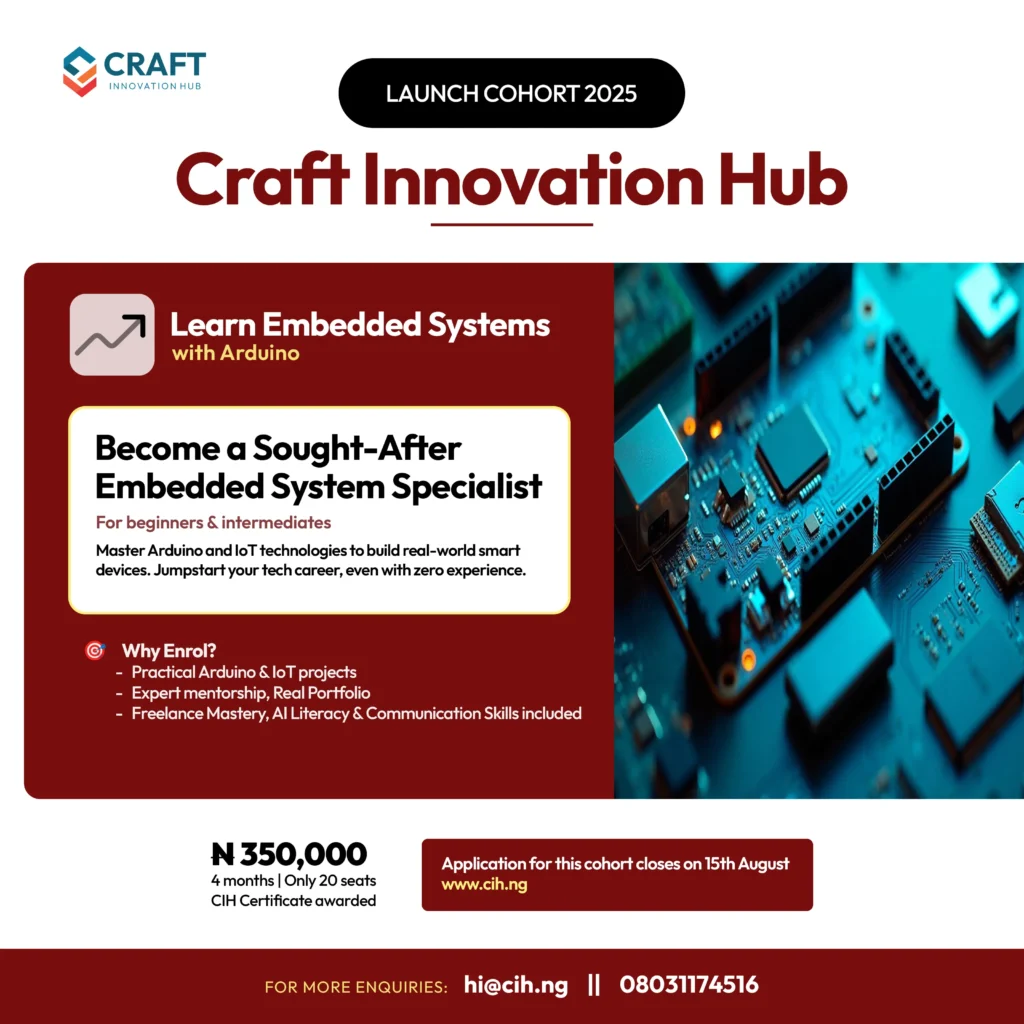
Build Smart Devices. Learn Electronics. Solve Real Problems.
Learn how to design and prototype intelligent electronic systems using Arduino, sensors, actuators and practical programming.
This 4-month Career Pathway combines electronics, C/C++ programming, automation, introductory IoT, project development, and entrepreneurship.
₦350,000 | 4 Months | Career Pathway | In-Person | Maximum 20 Learners
Course at a Glance
Programme: Embedded System Development with Arduino
Pathway: Career Pathway
Duration: 4 months
Tuition: ₦350,000
Mode: In-person, hands-on practical training
Schedule: Weekday and weekend options, subject to cohort timetable
Cohort Size: Maximum 20 participants
Entry Level: Beginner-friendly
Assessment: Practical exercises, mini-projects and final capstone
Certificate: CIH Certificate after successful completion
Sponsorship: Selected sponsored opportunities may be available
What You Will Learn
The programme develops practical skills in:
- embedded systems and Arduino fundamentals;
- basic electronics and circuit concepts;
- voltage, current, resistance and Ohm’s Law;
- breadboarding and prototyping;
- Arduino IDE and C/C++ programming;
- digital and analogue input/output;
- temperature, light, motion and other sensors;
- relays, motors and other actuators;
- LCD displays, buzzers, keypads and interfaces;
- Bluetooth and introductory IoT applications;
- solar, battery and basic power-management concepts;
- troubleshooting and project documentation;
- project planning and component selection;
- freelance, entrepreneurship and communication skills.
What You Will Build
Smart Devices You Can Demonstrate
You will work on guided electronics and automation projects throughout the programme.
Projects may include solutions such as:
- temperature or environmental monitoring systems;
- automated lighting;
- motion detection;
- sensor-based alarms;
- basic smart-control systems;
- and other Arduino-based prototypes.
The programme concludes with a capstone embedded-system project addressing a practical problem, followed by demonstration and presentation.
The goal is to leave with a working prototype and evidence of how you approached the problem, design and implementation.
Your 4-Month Learning Journey
Electronics & Arduino Foundations
Understand embedded systems, basic electronics, breadboarding, Arduino and programming fundamentals.
Sensors, Actuators & Programming
Connect sensors and output devices while developing stronger C/C++ programming skills.
Automation & IoT Applications
Work with intermediate sensors, servos, power systems, Bluetooth and introductory connected-device applications.
Project Development & Demo
Plan, build, troubleshoot and present a complete embedded-system project addressing a real or realistic need.
Who Is This Programme For?
This programme is suitable for:
- beginners interested in electronics and technology;
- students and graduates in engineering, computing or related fields;
- aspiring embedded-system and IoT developers;
- makers and technology enthusiasts;
- entrepreneurs interested in developing smart products;
- technicians who want to add electronics and automation skills.
Previous Arduino or programming experience is not required.
You should, however, be prepared for hands-on electronics work, basic programming and consistent project practice.
Why Learn Embedded Systems at CIH?
Build Physical Solutions
You do not only write code. You connect hardware, sensors and software to create functioning devices.
Learn Through Projects
Mini-projects and practical exercises help you apply electronics and programming concepts as you progress.
Solve Local Problems
Projects can explore applications in areas such as agriculture, energy, automation and environmental monitoring.
Develop Commercial Skills
Freelancing, entrepreneurship, project documentation and client communication are integrated into the programme.
Demonstrate Your Work
Your capstone gives you a practical prototype you can document, present and continue improving.
Part of the CIH Career Pathway
Embedded System Development with Arduino is part of CIH’s Career Pathway, focused on building practical competence and project evidence.
The programme also introduces participants to portfolio development, freelancing, entrepreneurship and professional communication.
Eligible participants may later access relevant CIH Career Pathway support where applicable.
CIH does not guarantee employment, freelance contracts, investment or income.
Frequently Asked Questions
Is this course suitable for beginners?
Yes. The programme starts with electronics and Arduino fundamentals and does not require previous embedded-systems experience.
Do I need to know programming already?
No. The curriculum introduces Arduino programming and fundamental C/C++ concepts during the programme.
What kind of projects will I build?
Projects may involve sensors, alarms, automated lighting, environmental monitoring, control systems, and other Arduino-based solutions.
Does the course include IoT?
Yes. The curriculum introduces networking concepts through Bluetooth and basic IoT demonstrations.
Do I need a laptop?
Yes. You should have access to a suitable laptop for programming, documentation, and project development.
Are hardware components provided?
CIH provides the practical learning environment and relevant training equipment. Any personal kits, components or specialised project requirements should be confirmed with the programme team before your cohort begins.
Will I receive a certificate?
Yes. Participants who complete the programme and applicable project requirements receive a Craft Innovation Hub certificate.
Are sponsorship opportunities available?
Selected sponsored or subsidised seats may be available depending on partner funding and eligibility.
Ready to Build Something That Works?
Learn how electronics, programming and automation come together to create practical smart systems.
Embedded System Development with Arduino
₦350,000 | 4 Months | Career Pathway | Maximum 20 Learners