
The real question is whether Nigeria can help young people turn education, creativity and visibility into demonstrable competence, decent work and value that survives the viral moment.
By Abdulrasaq Ahmed Abiodun and Idris Idris Ayobami
The phrase “ Olodo uprising ” was designed to provoke. It succeeded because it compressed two Nigerian frustrations into two words: graduates who feel cheated by the economy and creators who feel mocked by traditional gatekeepers. The dispute is not ultimately about whether creators or graduates are more intelligent. It is about whether Nigeria can convert either attention or education into sustained productive value.
The disparity reached public discourse in June 2026. According to reports of his appearance on the Afropolitan podcast, rapper YCee criticised what he regarded as the growing public accommodation of anti-intellectual behaviour. Reports noted that he used the derogatory Nigerian expression “Olodo”, commonly directed at someone considered academically weak, to characterise the trend.
The response from the creator community revealed competing views of education, opportunity and digital success. Habeeb Hamzat, the streamer widely known as Peller, rejected the use of his name as an example of intellectual decline and argued that his success as a creator should not be treated with contempt.
Separately, his partner and fellow content creator Jarvis offered a pragmatic economic argument. According to entertainment media reports, she noted her academic background, stating that she attended and graduated from school. However, she argued that the lack of employment has pushed many young Nigerians toward content creation as a survival tool.
Her frustration highlights a structural challenge in the labour market. In its Q3 2023 Labour Force Survey, the National Bureau of Statistics reported that over 92 per cent of employed Nigerians work in the informal sector. Nigeria’s labour market offers limited access to formal employment protections, pensions and structured career progression. The debate reflects growing doubt about whether qualifications alone can deliver the economic security many families expect. As Nollywood filmmaker Mary Njoku noted in her public reaction to the debate, reported by The Guardian Nigeria, this trend is the consequence of a system that leaves degree holders struggling for meaningful work and decent wages.
To understand this tension, we must test three explanations for why some aspiring creators are pivoting toward the attention economy.
First, there is the economic adaptation argument. Formal education operates in a punishing macroeconomic environment. The World Bank’s July 2026 country diagnostic estimates that nearly four in five Nigerians are either poor or vulnerable to falling into poverty. Furthermore, graduate-workplace mismatch is not a new concern.
A 2012 study of Nigerian graduate employability published in the US-China Education Review identified weaknesses in communication, information technology and critical thinking. The debate is being conducted with more emotion than evidence because current national data on graduate workplace readiness, earnings and career transition remain difficult to access. However, when employers cannot rely on certificates as evidence of workplace readiness, those credentials carry less signalling value.
The visibility of successful creators has made digital content appear to some young Nigerians as an alternative route to income and recognition. At its most developed, content creation can support production teams, commercial partnerships and the international circulation of Nigerian culture.
Second, the pivot is shaped by algorithmic incentives and survivorship bias. We must distinguish between highly successful visible creators, aspiring creators operating at a financial loss, and young people pursuing traditional technical careers. Online platforms use audience responses as one factor in deciding which content reaches more people. Consequently, many young creators optimise their behaviour for the specific metrics that algorithms reward. However, successful creators are far more visible than those who never build a sustainable audience or income.
Third, the anxiety over academic certificates is rooted in measurable institutional challenges. Within the Technical and Vocational Education and Training (TVET) system, an August 2025 study in African Scholar Publications highlighted a persistent mismatch between industry-required competencies and institutional training. Vocational curricula often remain disconnected from the realities of automation and smart manufacturing.
TVET is not the only part of the education system facing questions about workplace readiness. One Nigerian engineering professional recently warned that many university graduates enter the labour market without sufficient practical experience. These examples illustrate a recurring concern about the distance between classroom learning and workplace practice.
Nigeria should stop treating enrolment, attendance and certification as sufficient evidence of successful skills development. We must instead focus on moving from passive certification and temporary visibility to demonstrable capability and sustained value.
Product culture means a disciplined expectation that learning, training and creativity should develop demonstrable capability or useful outputs, while recognising that not every valuable outcome is immediately commercial. Theoretical knowledge, basic research, philosophy and foundational science remain economically and socially vital. However, we must discard the assumption that physical manufacturing is productive while digital entertainment is merely consumptive. The real distinction we must draw is between platform-dependent reach and assets the creator can control, transfer, license or monetise across channels.
Crucially, building a product culture does not mean every young Nigerian must become an entrepreneur or a start-up founder. Entrepreneurship cannot absorb everyone who needs productive and adequately paid work. Nigeria desperately needs productive wage employment, reliable public-sector roles, and strong labour demand from functional industries that can hire trained people.
A productive economy also needs people who create value within organisations without owning the final product, including skilled employees, public servants, researchers, technicians, teachers, and healthcare professionals. Whether a person is a creator, a software engineer, or a corporate employee, they need demonstrable competence, fair access to work and a pathway through which their contribution improves their income, security or professional growth.
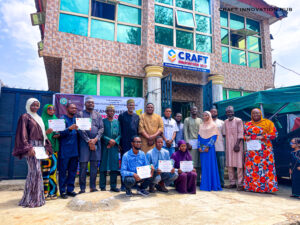
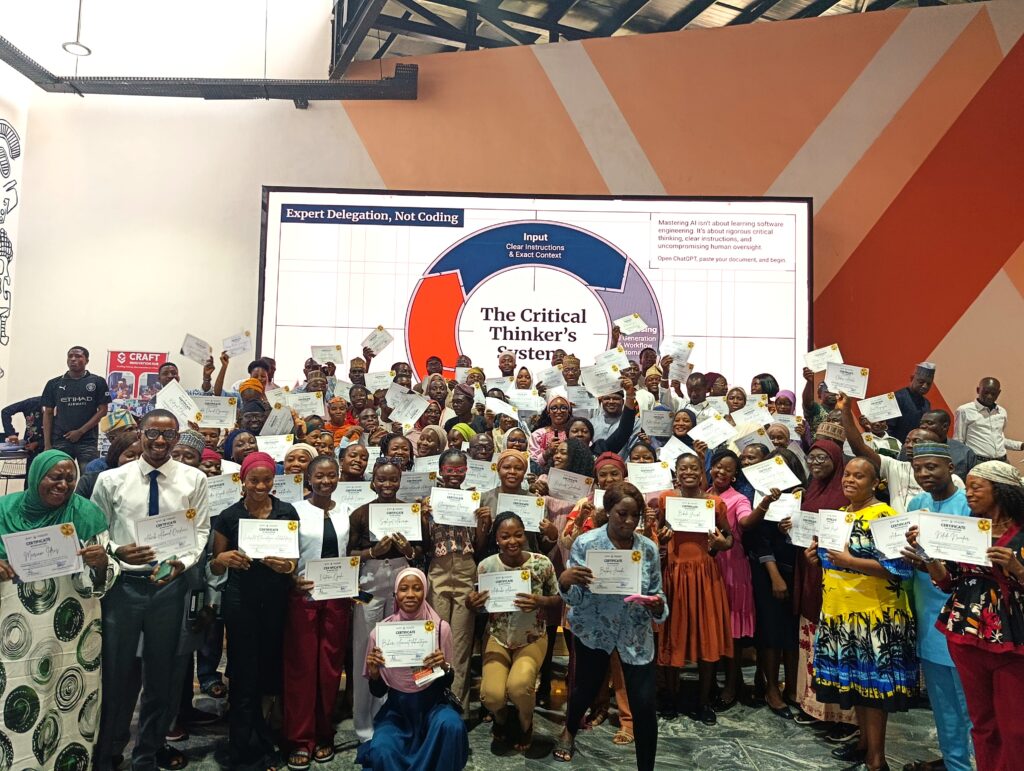
Transitioning a population from temporary visibility to sustained value requires practical capability and market connection. Training must move beyond platform registration to yield practical deliverables. In our work at Craft Innovation Hub in Ilorin, a recent six-day Amazon KDP programme provided a modest local example. According to an internal programme report, nine certified participants created Amazon KDP accounts and submitted completed books during the six-day period.
The output was immediate, although the programme did not yet establish market conversion, such as longer-term sales or income outcomes. Training is not successful because people simply attended. It is successful when they can show what they built, explain its value and find someone willing to use or pay for it.
To scale this philosophy, policymakers, industry leaders, and educators could prioritise four core reforms.
Require proof of practical competence in publicly funded education and training. Academic institutions could pilot practical project defences before joint academic and industry panels, ensuring alternative assessment methods are provided for highly theoretical fields.
Track immediate outputs and follow participants at three, six and twelve months. Government could begin a limited outcome-tracking pilot across selected publicly funded digital-skills programmes to measure post-training employment, with appropriate privacy and data-protection safeguards.
Expand protected, work-based learning. A broader approach could include wage-sharing grants and screened and supported master artisans operating within an agreed training and safeguarding framework. This ensures that informal enterprises participate in creating genuine learning pathways.
Creators and artisans should have affordable business support. Bar associations, innovation hubs and specialist clinics could pilot accessible support for pricing, bookkeeping, customer acquisition, and intellectual property, helping young creators protect their brand names and structure their businesses for long-term viability.
Nigeria can defend the dignity of learning without demeaning entertainment. The real task is to ensure that both a graduate’s competence and a creator’s audience can become foundations for useful work, ownership, and lasting value.
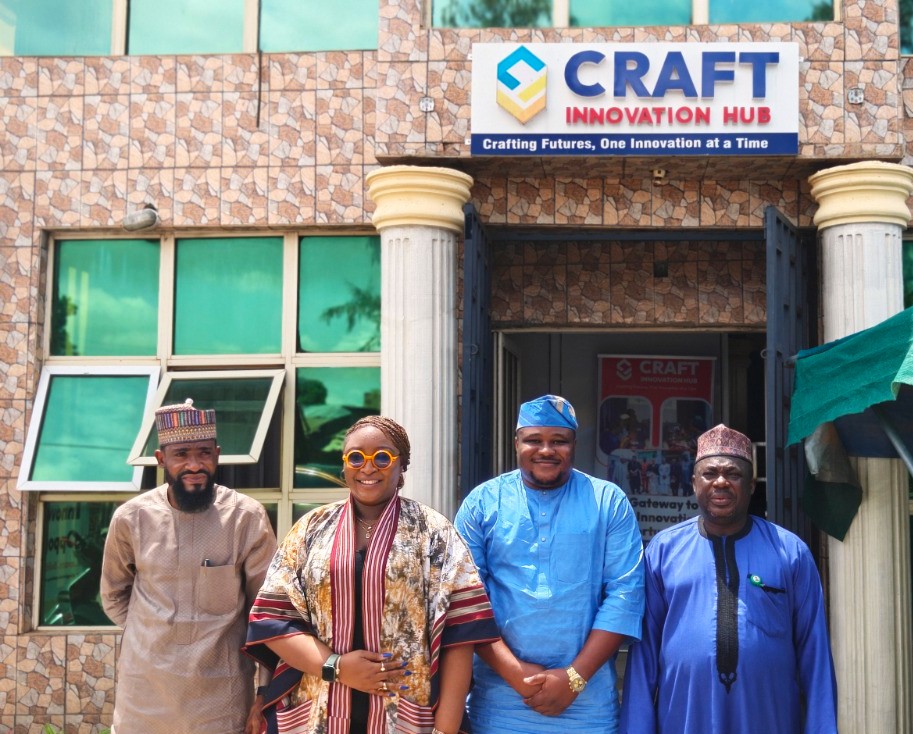
Abdulrasaq Ahmed Abiodun, Chief Operating Officer, and Idris Idris, Junior Data Scientist, work with the Craft Innovation Hub, Ilorin. They write in their personal capacities.