
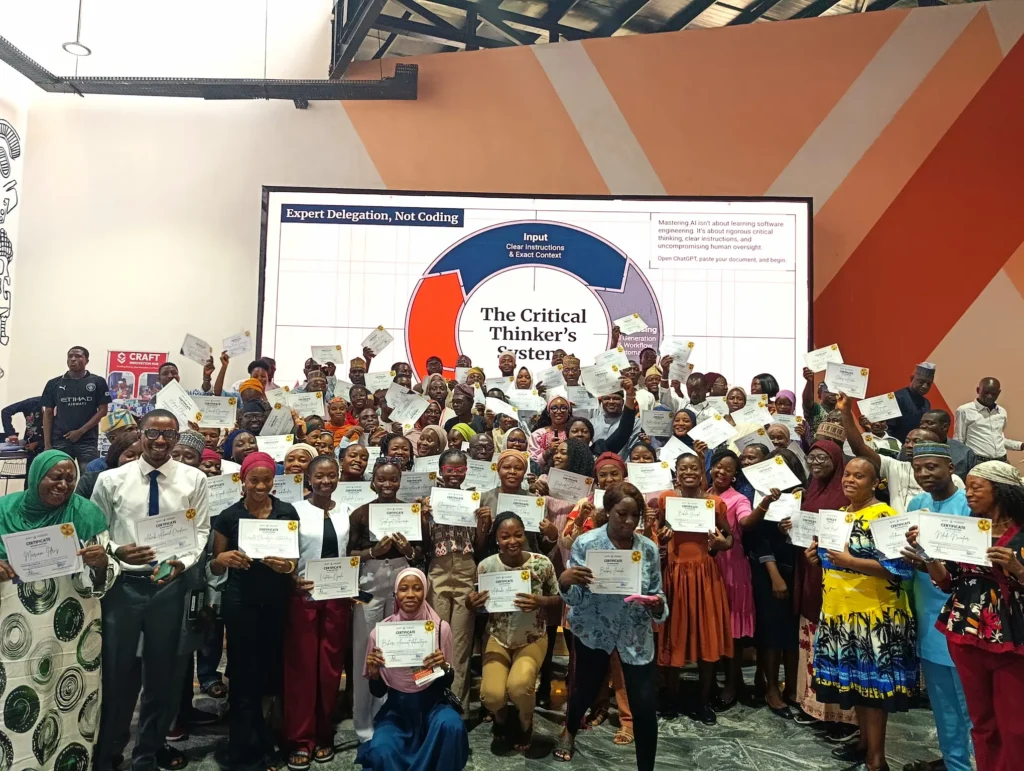
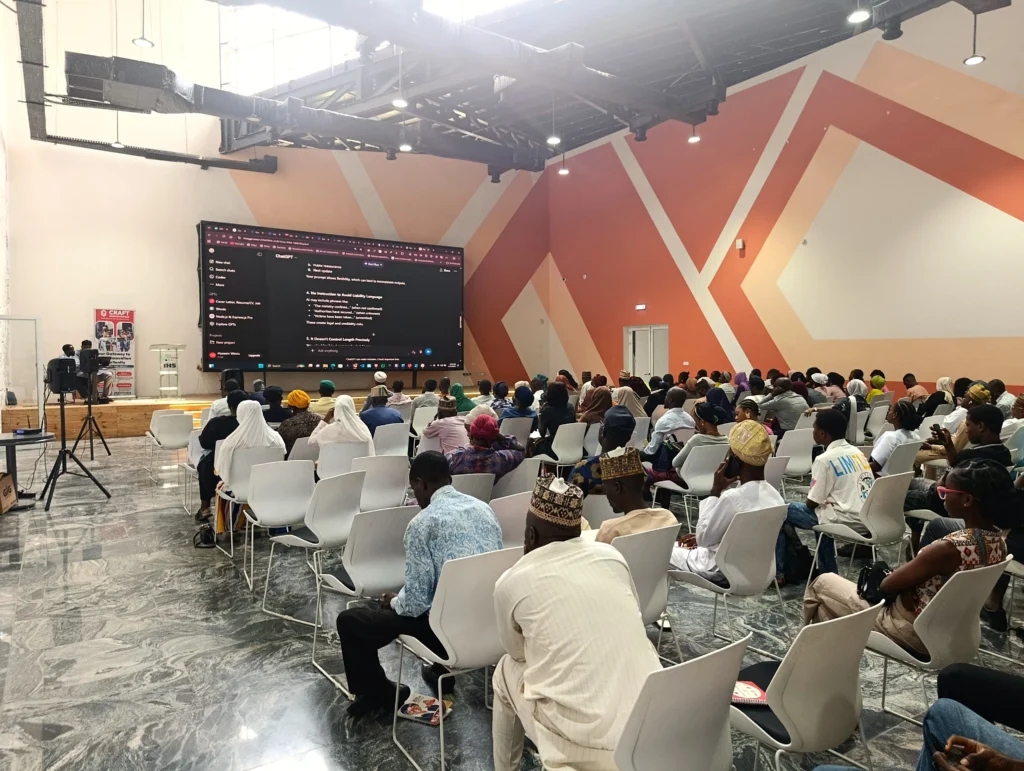
By 9:40 am, the hall at Ilorin Innovation Hub had already settled into working mode. Laptops were open across some rows. In many other seats, mobile phones were out and ready. By the time the AI-Assisted Media Workflow Practical Capacity Programme began at 10:00 am, the tone of the day was already clear: this would not be a sit-back-and-listen event. It was a hands-on training session, and participants were expected to work as they learnt.
That practical atmosphere remained visible throughout the programme, which brought together more than 180 participants from across Kwara’s public communication space. The audience included a broad mix of government communication officers, ministry staff, and public information personnel, many of them directly involved in handling speeches, statements, event reports, interviews, and official information flow across ministries, departments, and agencies.
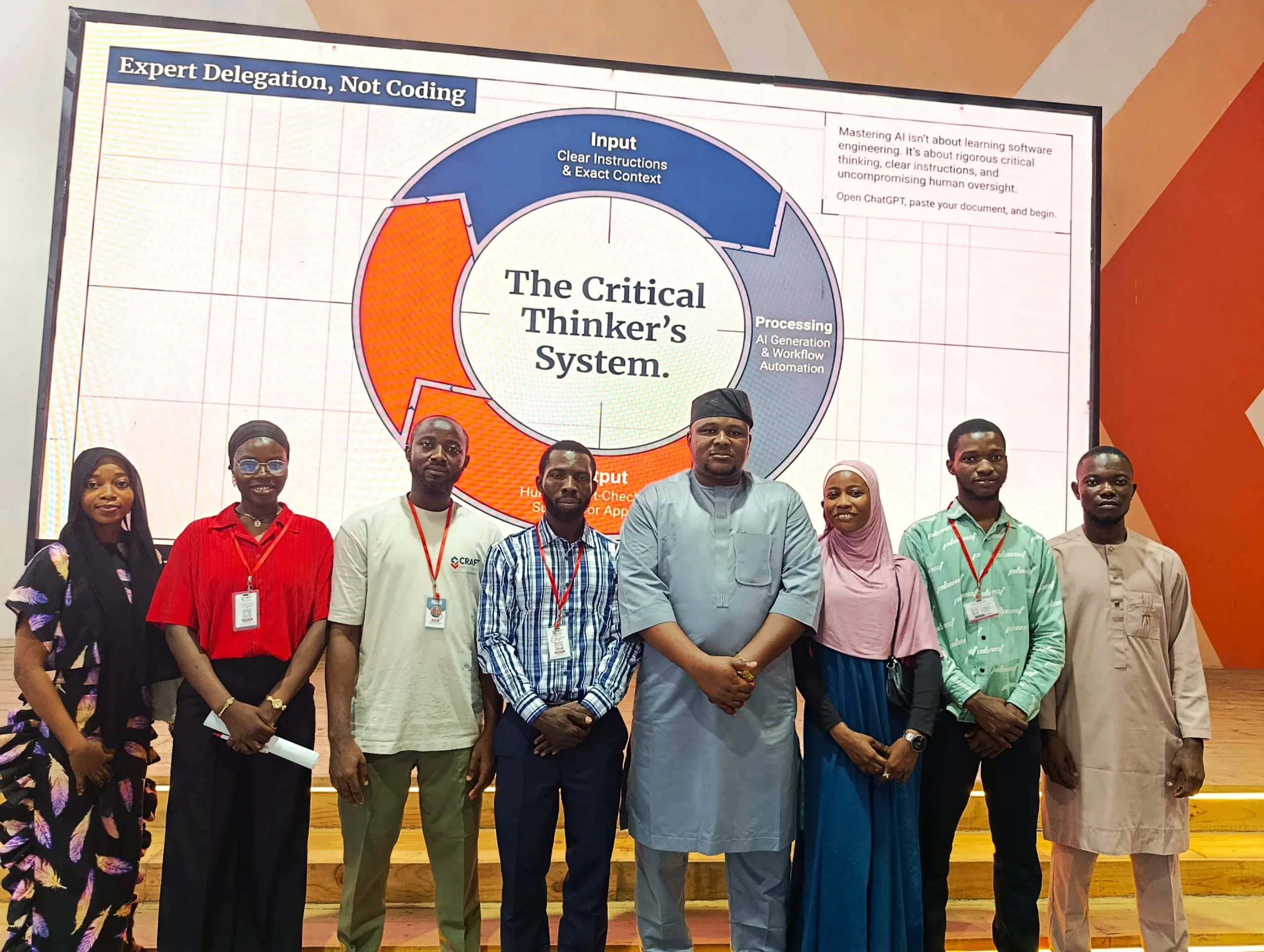
The one-day intensive programme was delivered through the partnership between the Kwara State Government, through the Ministry of Communications, and Craft Innovation Hub. It opened with a keynote speech by Abdulrasaq Ahmed Abiodun, Founder and Chief Operating Officer of Craft Innovation Hub, followed by remarks from the Kwara State Commissioner for Communications, Hon. Bolanle Olukoju, who declared the programme open. The session was co-facilitated by Oseni Abdulwasiu, Head of Operations at Craft Innovation Hub, while Abeeb Oredunni, Press Secretary of the Ministry of Communications, served as Master of Ceremonies.
The official title of the event, AI-Assisted Media Workflow Practical Capacity Programme, accurately reflected both the content and the delivery style. The training was built around the everyday communication tasks public officers face, especially where time pressure, volume of information, and the demand for clean official output often collide. Rather than presenting artificial intelligence as a vague future idea, the sessions focused on how it can be used in real communication work with structure and care.
The practical learning moved in a clear sequence. Participants were first introduced to prompt engineering, where they learnt how to give clearer and more disciplined instructions before using AI tools. From there, the training moved into AI-assisted transcription, showing how recorded events and audio materials can be converted into text using platforms such as unscribe.co, descript.com, and otter.ai. The next step was not simply transcription, but cleanup: how to take raw output and shape it into forms suitable for feature writing, news reports, briefs, summaries, and interviews. The sessions later introduced participants to agentic AI and workflow automation, with practical examples built around tools such as n8n.io and make.com.
That progression mattered because it matched the actual sequence many communication officers deal with in daily work. A recorded event must become text. The text must be cleaned. The clean text must become a brief, a report, a feature, an interview, or a public-facing communication output. The programme addressed that workflow directly, rather than treating AI as a shortcut detached from professional practice.
In his remarks, Hon. Bolanle Olukoju located the intervention within a broader institutional need. “Today, we strengthened our communication system by equipping Press Secretaries and Information Officers across MDAs in Kwara with AI-assisted media workflow training,” he said. The statement gave the day its clearest public frame. This was not simply a technology seminar. It was an effort to improve how public communication is processed and delivered across government structures.
From the side of the organisers, Abdulrasaq Ahmed Abiodun stressed that the point was not to replace judgment with software, but to improve workflow without weakening responsibility. “This programme is not about replacing human judgment,” he said. “It is about helping communication professionals work faster, smarter, and more responsibly, while preserving accuracy, structure, and public trust.”
That distinction appeared to resonate strongly with participants, particularly in the sessions on prompting and transcription. For some, the day corrected assumptions they had carried into the room.
One participant, Kafayat Olayemi, said the training changed her view entirely. “I honestly did not plan to come around again because I felt there was nothing more to learn, and it was really because attendance was compulsory that I came,” she said. “But after attending this training, I am wowed. It has reshaped my perspective completely and made me realise what I have been doing wrong.”
Her reaction reflected one of the day’s strongest outcomes: the movement from casual awareness of AI tools to a more structured understanding of how they should be used. For many participants, the revelation was not merely that tools exist, but that results depend heavily on the quality of the instruction given before the tool is used.
For Fauzeeyat Abdulazeez, the most immediate value of the programme appeared in transcription, one of the most time-consuming tasks in media and information work. “One of the biggest things I learnt today is how much time I can save,” she said. “Transcribing a 30 to 40-minute recording usually takes me between two and three hours, but now I have seen how I can get it done within five to fifteen minutes.”
Another participant, Ahmed Alabere, linked the session directly to his own productivity. “This programme has really come at the right time for me,” he said. “One area I have struggled with is transcription, especially because I tend to procrastinate on it. But what I learnt here will definitely improve my productivity from now.”
Those remarks aligned with what was visible in the room. The training was not practical only in name. Participants with laptops worked directly from their devices during the sessions, while many others followed actively on their phones, testing prompts, exploring tools, and watching how recorded content could be processed into cleaner communication formats in real time. The room looked less like a conventional seminar and more like a working lab for public communication.
That hands-on structure helped ground the more advanced parts of the programme as well. The sessions on agentic AI and workflow automation did not stand alone as technical theory. They were introduced in relation to a familiar challenge: how to reduce repetitive manual effort in communication offices without surrendering review, editorial judgment or approval discipline. In that sense, the training tied together not only tools, but process.
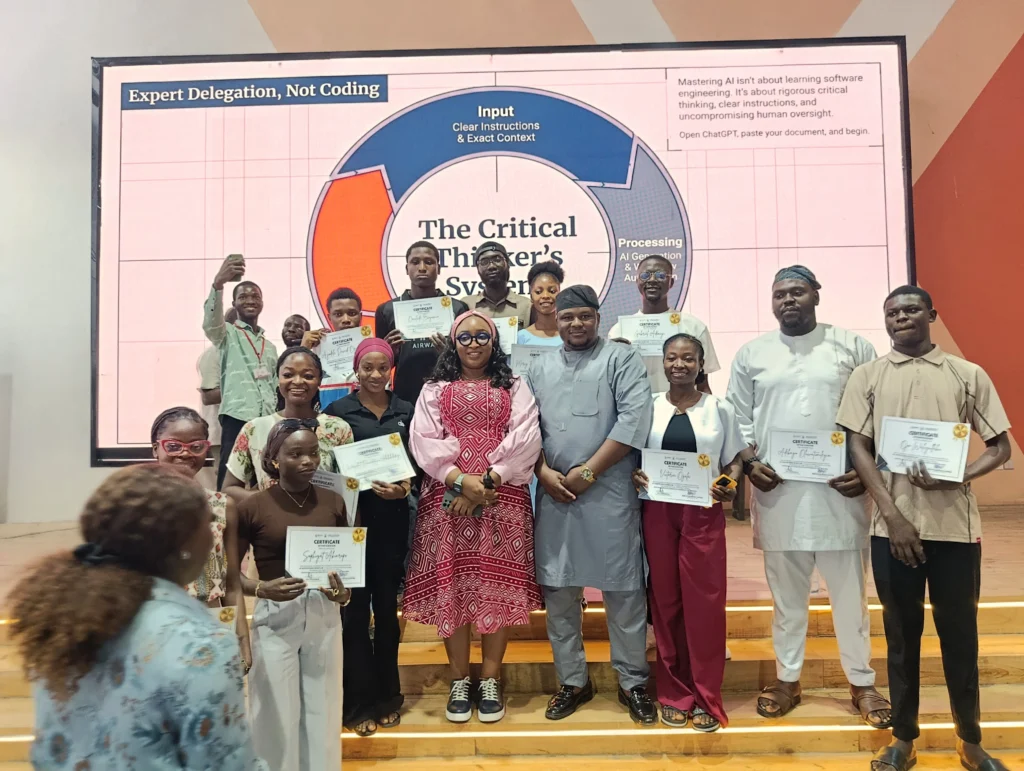
The programme was initially expected to round off by 1:00 pm, but was extended to about 1:30 pm, partly due to photographic sessions after the close. By then, certificates had been issued, marking the formal completion of the event. Yet the significance of the day rested less in the certificates than in what participants appeared to take away from the room: better prompts, faster transcription options, clearer workflow thinking, and a stronger sense that AI can support public communication only when it is properly guided and carefully reviewed.
For the Ministry of Communications, the partnership with Craft Innovation Hub offered a practical response to a real institutional need. For Craft Innovation Hub, it reinforced its role as a capacity-building partner focused on useful adoption rather than abstract enthusiasm about technology. For participants, the value seemed more immediate: work that once felt slow, repetitive or unclear had been reintroduced in a form that appeared more manageable.
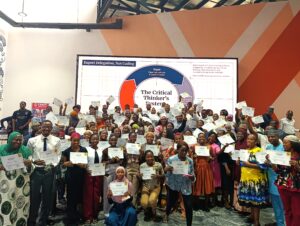
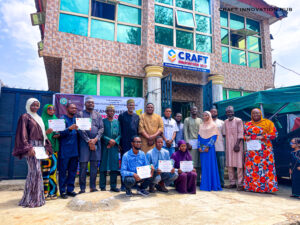
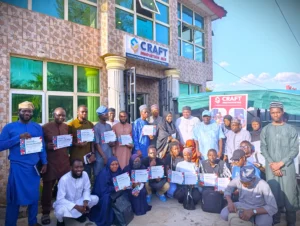
As the hall emptied after 1:30 pm and participants gathered for photographs with certificates in hand, the clearest result of the day was already visible. The conversation had shifted. What began as a training on AI tools had become a more practical discussion about how public communication can be done better, faster, and with greater discipline. On April 22 in Ilorin, that shift was not just described. It was practised.